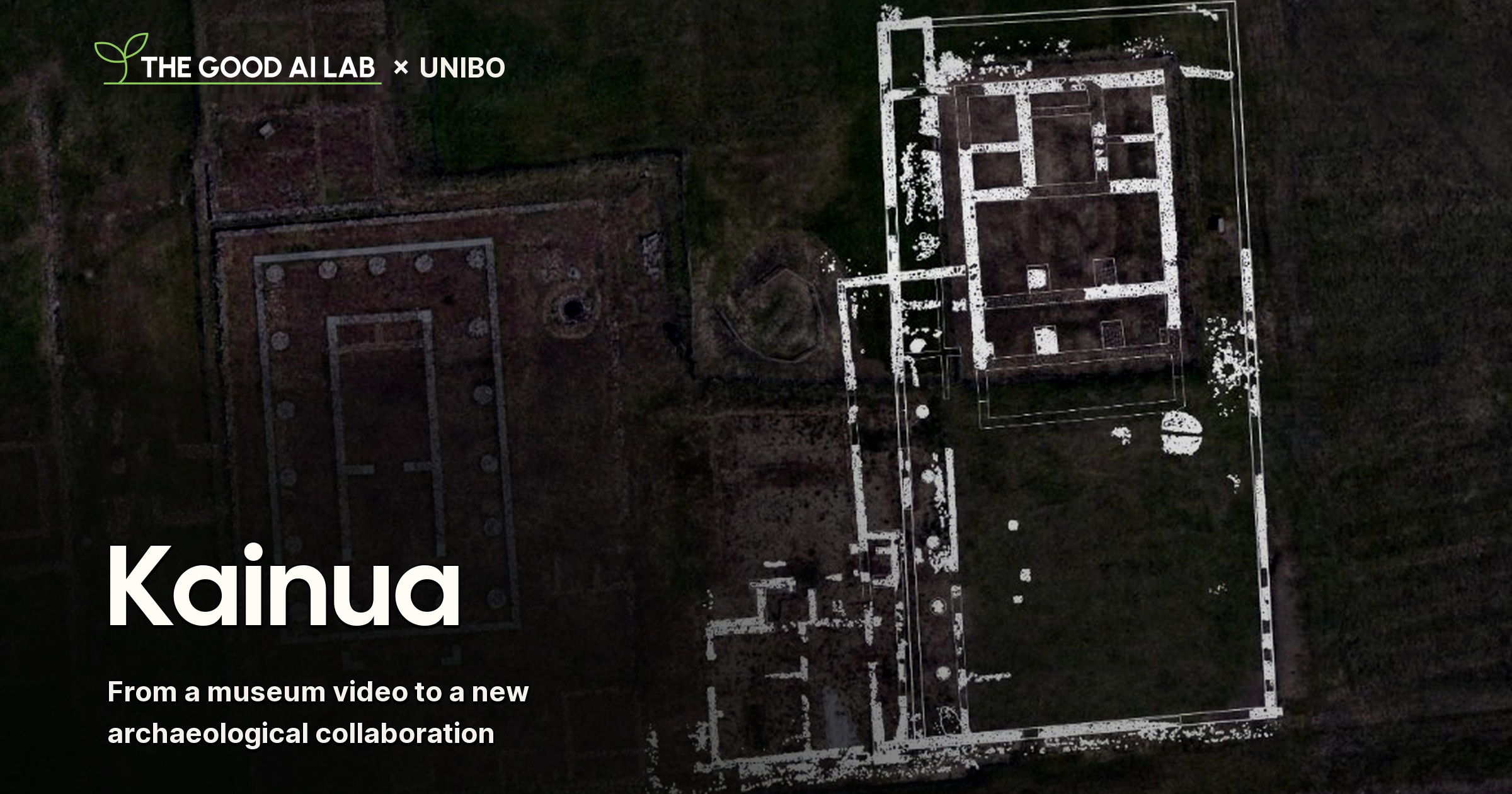
Kainua, the ancient Etruscan city of Marzabotto, is one of those places where archaeological evidence still feels close to the surface. Its streets, sacred areas, objects, and ritual traces carry a dense story about how a city was founded, inhabited, and understood by the people who lived there.
In June 2026, Lorenzo Andraghetti and Pier Luigi Dovesi of the Good AI Lab approached archaeologists working on the Kainua project with a simple question: could we collaborate? We wanted to understand where AI and digital tools could be useful without replacing archaeological interpretation.
The first concrete answer was practical. Before starting a larger research collaboration, the archaeologists asked us to help with a public-facing video for the opening of the National Etruscan Museum of Marzabotto and the archaeological area of Kainua.
That became our first piece of work together.
The video focuses on the Sanctuary of Uni: the Tuscanic temple, the sacred precinct, the worship of Uni and Vei, and recent finds around the portico and altar. At its center is one of the most delicate findings from the site, the deposition of an infant beneath the foundation wall of the sacred enclosure. It also follows the ritual sequence around the sanctuary's foundation, including the sulcus, the sacred boundary trench, and the inverted cup marked with a cross aligned to the cardinal points.
Chiara Albazzi and Matilde Guerra, archaeologists at the University of Bologna, directed the archaeology throughout. They shaped the story, reviewed the sequence of scenes, and kept every visual grounded in the evidence.
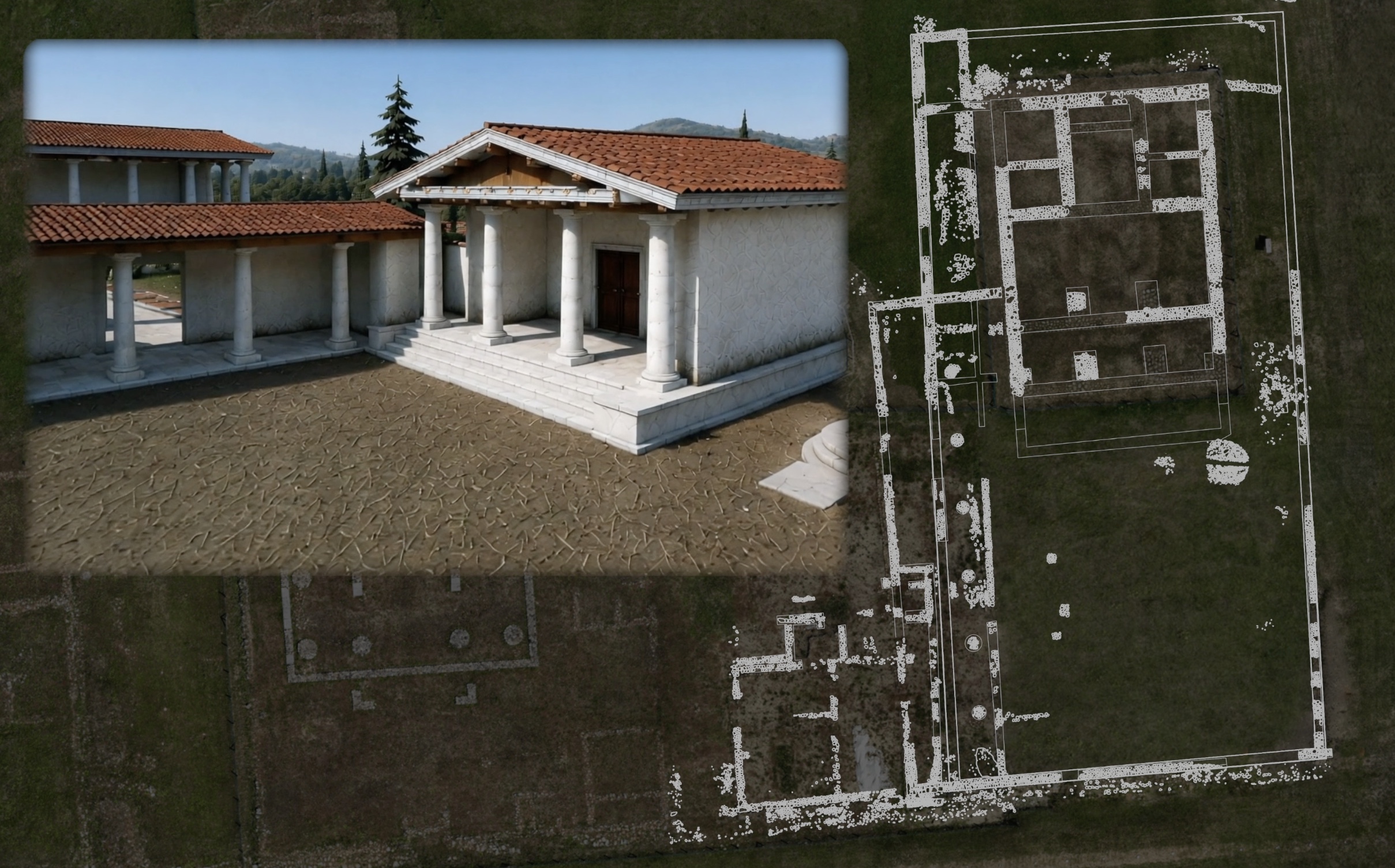
The archaeologists had already used AI to create many of the visual components. Our contribution was practical: we helped turn that material into a finished museum piece, putting the scenes in sequence and keeping the story clear for visitors. The aim was not to invent a story, but to make a complex discovery more legible.
The finished video was presented for the museum opening and is now part of the visitor experience at the National Etruscan Museum of Marzabotto. We are grateful to the museum, and to Professor Andrea Gaucci and Professor Elisabetta Govi of the University of Bologna, for their trust and support. You can watch it on YouTube, and if you can, see it again in the museum together with the archaeological context it was made for.
This first piece of work opened the door to a wider collaboration with the University of Bologna. The next phase will explore how digital tools can support the reconstruction and representation of specific aspects of Kainua: its city, its society, its rituals, and the material traces that connect them. Archaeologists often work with evidence that is fragmentary, spatial, and hard to communicate outside specialist contexts. Tools can help, but only if they stay grounded in archaeological knowledge and expert review.
This summer the UniBo team announced a remarkable ritual well in the same sacred precinct, with bronze offerings tied to the city's foundation. Congratulations to the archaeologists and the museum. We will keep working alongside them to help make discoveries like this clearer and more accessible.
A goal of the collaboration is to produce open-source public projects, in the spirit of work like the Piacenza Liver: tools that make complex heritage material easier to explore, reuse, question, and improve together.
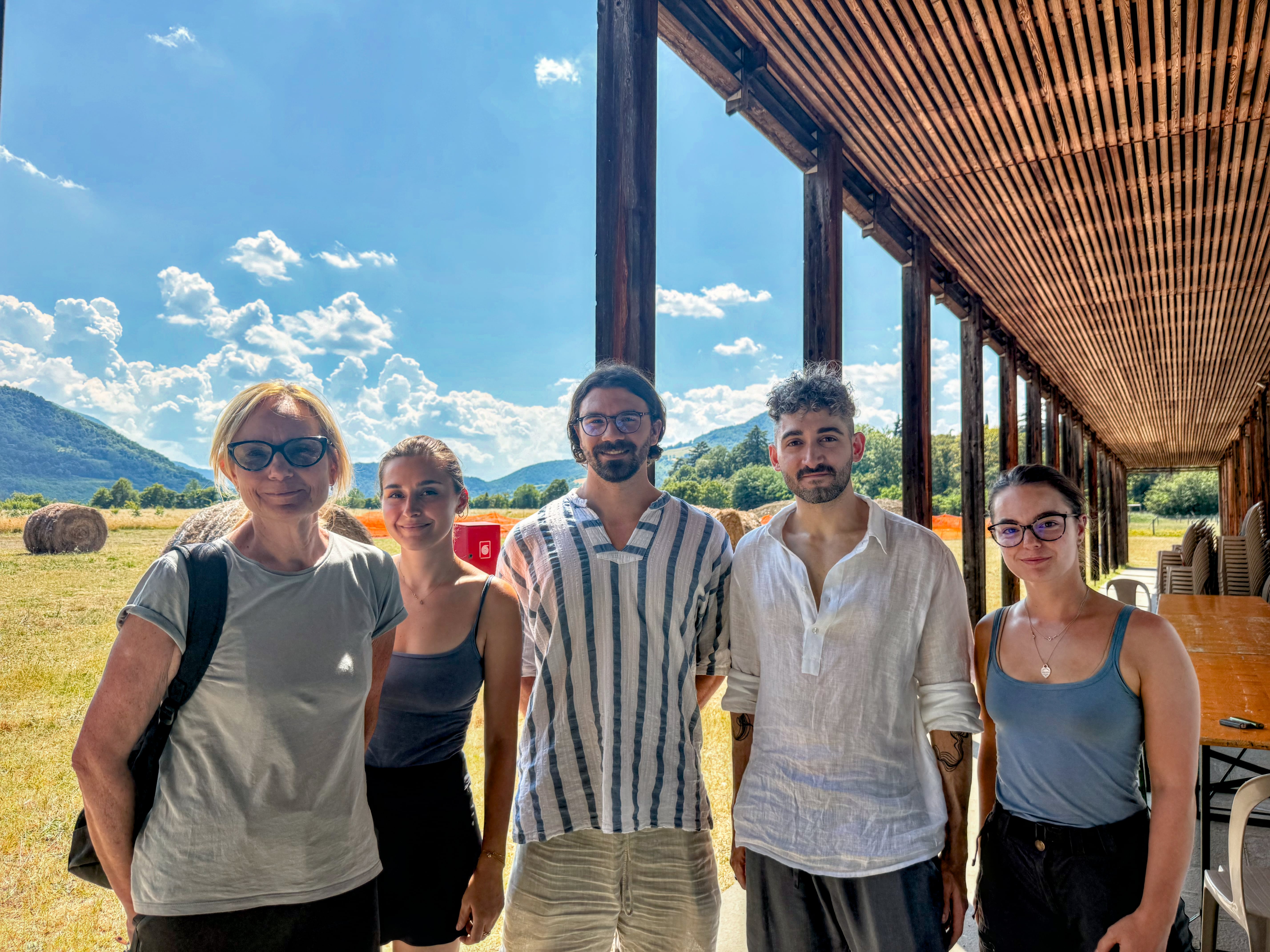
Meeting at Marzabotto with the University of Bologna
From left: Elisabetta Govi (University of Bologna), Matilde Guerra (University of Bologna), Lorenzo Andraghetti (The Good AI Lab), Pier Luigi Dovesi (The Good AI Lab), and Chiara Albazzi (University of Bologna). 24 June 2026.